


MECAM Fellow (2026-2029)
Project: Echoes of Expulsion: Contested Pasts, Living Memories, and the Morisco Question in Arab Thought
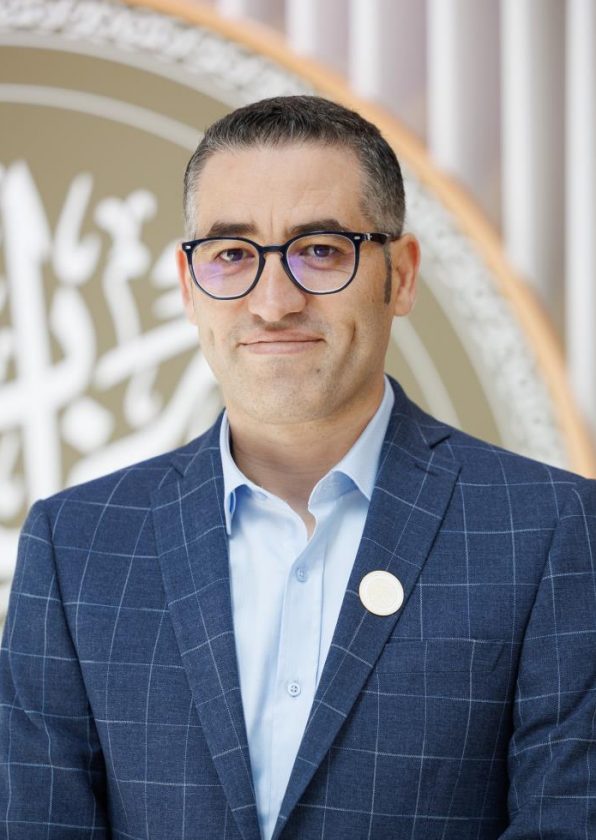
Dr. Houssem Eddine Chachia
(Faculty of Humanities and Social Sciences, University of Tunis, Tunisia)
Dr. Houssem Eddine Chachia is Associate Professor of Early Modern History at the University of Tunis. His research focuses primarily on Morisco history, especially exile, diplomacy, identity formation, and the changing representations of these issues over time. His work combines social, cultural, and diplomatic history to examine the Mediterranean after the fall of al-Andalus. He is the author of several books, including The Morisco Landscape, winner of the 2024 Sheikh Zayed Book Award, and the founder of The Moriscos in Tunisia blog, launched in 2008. He has received numerous distinctions, including the 2020 Best Young Researcher in History Award from Beit al-Hikma in Tunisia. He was a Visiting Professor at Harvard University and the University of Murcia.
Contact : chachia58@gmail.com
Interdisciplinary Research Field (IRF): IRF III « Memory & Justice »
This project examines how Arab representations of the Moriscos — Spain’s forcibly converted Muslims expelled in the early seventeenth century — have evolved from the aftermath of the expulsion to the present. Situated at the intersection of memory, identity, and justice, it asks how the Morisco question has been remembered, reinterpreted, and mobilized in Arab thought across different historical contexts. Building on my previous work on Spanish narratives of the expulsion, the project shifts the focus to Arab intellectual, literary, and cultural production, tracing how the Moriscos became a dynamic site of contested memory and a symbolic figure through which questions of belonging, historical accountability, and political legitimacy were negotiated.
The research combines quantitative mapping of textual production with close historical and analytical readings. It examines early modern works by authors such as al-Maqqarī, al-Ḥajarī, Ibn ʿAbd al-Rafīʿ, al-Ghazel, and al-Meknessi; modern historical writings and travel accounts; and contemporary novels, media productions, podcasts, documentaries, and online debates. By comparing these Arab representations with Spanish narratives, the project analyzes how different traditions have “mapped” the Morisco past as a claim to memory, justice, and identity.
The project’s main output will be a scholarly monograph offering the first comprehensive study of Arab representations of the Moriscos across four centuries. It will also produce articles, conference presentations, and public outreach activities. More broadly, the project contributes to memory studies, Arab intellectual history, and debates on historical justice by showing how the Morisco legacy continues to function not only as a record of past suffering but also as a living framework through which Arab societies negotiate identity, recognition, and justice in the present.