


MECAM Fellow (2026–2027)
Project: Involuntary Im/mobility and Youth Inequality in the Maghreb: Urban Peripheries in Tunisia, Algeria and Morocco
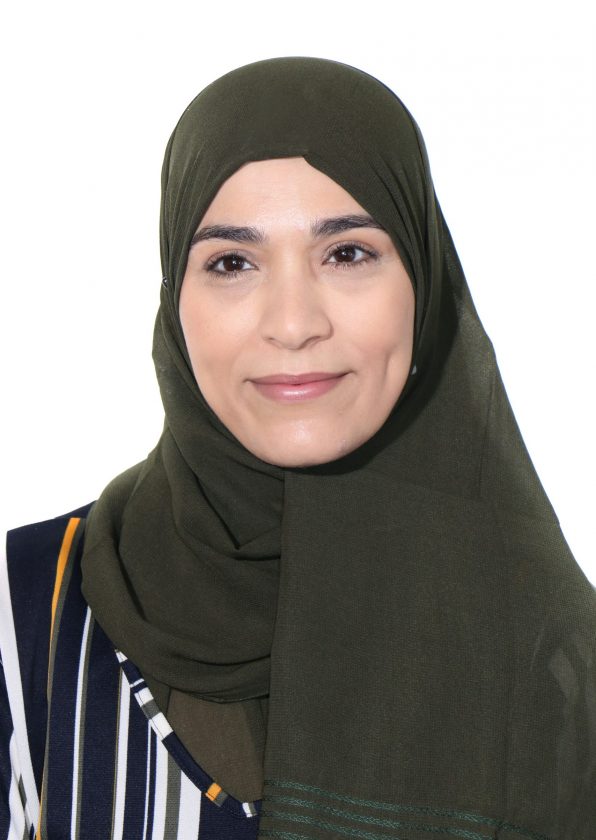
Dr. Fatma Abdelkaoui
(Involuntary Im/mobility and Youth Inequality in the Maghreb: Urban Peripheries in Tunisia, Algeria and Morocco)
Dr. Fatma Abdelkaoui holds a PhD in Economic Sciences from IHEC Carthage, an MA in Economics, and a BA in Finance. She teaches at the Mediterranean School of Business (MSB), South Mediterranean University, Tunis, and recently completed a research fellowship at the Middle East Centre, St Antony’s College, University of Oxford. Her research spans macroeconomic dynamics, financial and Islamic economics, cryptocurrency, innovation, unemployment, and the digital economy/ICT-environment nexus, with a growing focus on inequality, labor markets, and economic integration in the MENA region.
Contact : abdelkaoui.fatma@gmail.com
Interdisciplinary Research Field (IRF): IRF II « Inequality & Mobility »
This project examines how involuntary im/mobility among youth in Tunisia, Algeria, and Morocco reproduces and transforms socio-economic inequalities while shaping visions of the future. Focused on urban and peri-urban peripheries in Greater Tunis, Algiers, and Casablanca/Rabat, it engages with MECAM’s theme, “Imagining Futures – Dealing with Disparity,” and IRF II, “Inequality & Mobility.” Across the Maghreb, young people face high unemployment despite increased educational attainment, uneven regional development, and segmented labor markets. International migration offers a horizon of dignity and independence, yet the externalization of European borders and restrictive visa regimes render regular migration largely inaccessible, producing “involuntary immobility”: the desire to move blocked by structural barriers.
The project argues that involuntary im/mobility is not merely a consequence of inequality but a central axis structuring it, dividing young people between those able to leverage mobility for advancement and those confined to precarious local labor markets and marginalized neighborhoods. Three research questions guide the study: how spatial and socio-economic disparities shape access to mobility; how im/mobility reproduces or transforms inequality; and how young people experiencing constrained mobility imagine and act upon their futures.
Methodologically, the project combines semi-structured interviews and focus groups with young people aged 18–35, interviews with institutional and civil-society actors, and spatial analysis of transport, services, and infrastructure in selected peripheral neighborhoods across the three countries. Theoretically, it bridges the literatures on youth unemployment, migration regimes, and urban injustice, foregrounding temporal inequality: how blocked mobility produces unequally distributed “waiting” and stalled life courses. Anchored at MECAM in Tunis, the project will produce a MECAM Paper, a journal article, and an outline for a book manuscript on youth futures and inequality in the region.