


MECAM Fellow (2026–2027)
Project: The Tunisian Cultural Journal 21*15: Between Progressive Islamism and Liberation Theology
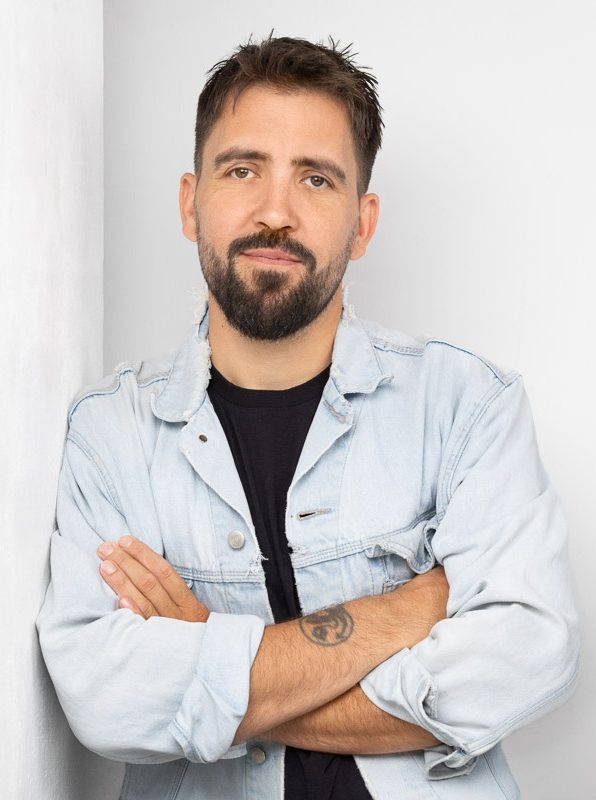
Dr. des. Florian Keller
(Graduate School, Global Intellectual History, Berlin/Germany)
Dr. des. Florian Keller recently defended his PhD in History at Freie Universität Berlin. His doctoral research at the Berlin-based graduate programme Global Intellectual History (GIH) examined foundational debates in postcolonial social science and sociology in Tunisia and Algeria. His research interests include intellectual history, particularly that of the Maghreb, with a focus on print culture and periodicals. In his current project, he explores the Tunisian periodical 21*15, which articulated an intellectual project that sought to formulate a theology of liberation within the framework of an “Islamic Left” in Tunisia during the 1980s.
Contact: flehan@posteo.de
Interdisciplinary Research Field (IRF): IRF V « Identities & Beliefs »
The project examines the Tunisian cultural journal 2115 (1982–1990) as a key site of intellectual production in the postcolonial Maghreb. Founded by the scholar Hamida Ennaifer during a period of profound political and economic crisis, 2115 brought together intellectuals from Tunisia, the wider Arab world, and beyond to debate questions of Islam, social justice, democracy, and political emancipation. Despite having received little scholarly attention, the journal offers a unique lens through which to examine the relationship between decolonization, print culture, and the development of social and political theory.
The project argues that 21*15 was more than a forum for political debate: it articulated an original intellectual project that sought to formulate a liberation theology within the framework of an “Islamic Left.” Drawing on the legacies of the nineteenth-century Nahda as well as the works of thinkers such as Hassan Hanafi and Ali Shariati, the journal critically engaged with Western universalism, pan-Arabism, and contemporary Islamist movements while developing distinct Tunisian perspectives. Its debates also reveal important networks of South–South intellectual exchange.
Based on a systematic analysis of the journal’s complete run (1982–1990), the project reconstructs the intellectual debates surrounding religion, politics, and social transformation in Tunisia during the 1980s. Particular attention is paid to how contributors positioned themselves within competing ideological traditions and negotiated the relationship between local, regional, and global frameworks of thought. By placing 21*15 at the center of the analysis, the project contributes to a more nuanced understanding of the Maghreb as a “theory-producing” area. It advances broader debates on decolonization, intellectual history, and the circulation of ideas in the Global South.