


MECAM Fellow (2026–2027)
Project: Performing Power: Hegemonic Masculinity and Its Discontents in Contemporary Tunisian and Algerian Fiction
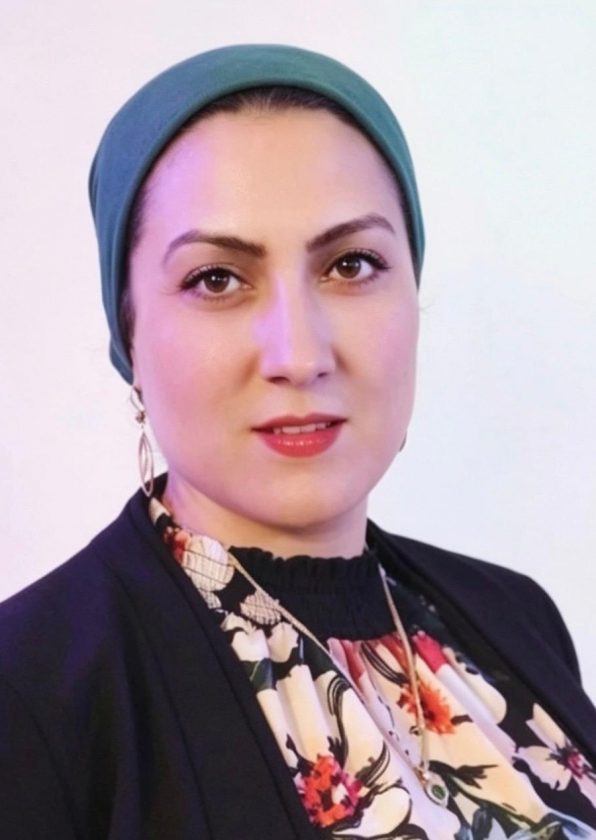
Dr. Amany Alsiefy
(Researcher, Berlin/Germany)
Dr. Amany Alsiefy holds a PhD in Literary and Cultural Studies from Freie Universität Berlin (2022). She taught at ZTG (Humboldt Universität Berlin) as adjunct lecturer (2024–2026), twice receiving Circle U Coil grant in collaboration with University of Oslo. She also serves as section editor for Open Cultural Studies (De Gruyter Brill). Her research examines body representation in postcolonial literature & culture, focusing on gender, masculinity, secularization, and fashion. She is the author of Modern Egyptian Women, Fashion, and Faith (Palgrave, 2023; German ed. 2026), and co-editor of forthcoming Matrilineal Family Saga Beyond Western Modernity (Leiden UP, 2026).
Contact : amany.abdelrazek@hu-berlin.de
Interdisciplinary Research Field (IRF): IRF I « Aesthetics & Cultural Practices »
This project conducts a socio-cultural analysis of literary texts, examining how masculinities are reconfigured in contemporary Tunisian and Algerian fiction under state authority and socio-economic precarity. It explores how male figures embody, negotiate, and challenge power across institutional and marginalized contexts—from police officers, inspectors, and parliamentarians to young men performing “protest masculinities” under conditions of blocked social mobility. Female characters—wives, sisters, lovers, and women in authority, such as lawyers or politicians—further complicate these dynamics, revealing their mutual constitution.
The corpus focuses on Habib Selmi’s Nisāʾ al-Bāṣatīn (The Women of al-Bāṣatīn) (2010) and Said Khatibi’s Nihāyat al-Ṣaḥrāʾ (The End of the Sahara) (2022), both set before Tunisia’s 2011 uprising and Algeria’s 1988 riots. Through representations of unemployed youth, state officials, and politically engaged women, the analysis explores tensions between state authority, legal power, resistance, and social constraint.
The theoretical framework combines Michael Rothberg’s “implicated subject” with R.W. Connell and J. W. Messerschmidt’s concept of hegemonic and protest masculinities, providing a decolonial lens that challenges Eurocentric models by foregrounding Maghrebi configurations of gender and authority. Methodologically, close reading and socio-cultural contextualization analyze narrative techniques—focalization, spatial poetics, and bodily semiotics—as mediators of gender and state power, demonstrating that literary texts actively theorize their social and gendered foundations.