


MECAM Fellow (2026–2027)
Project: Saharan Elites and Intra-African Student Mobilities
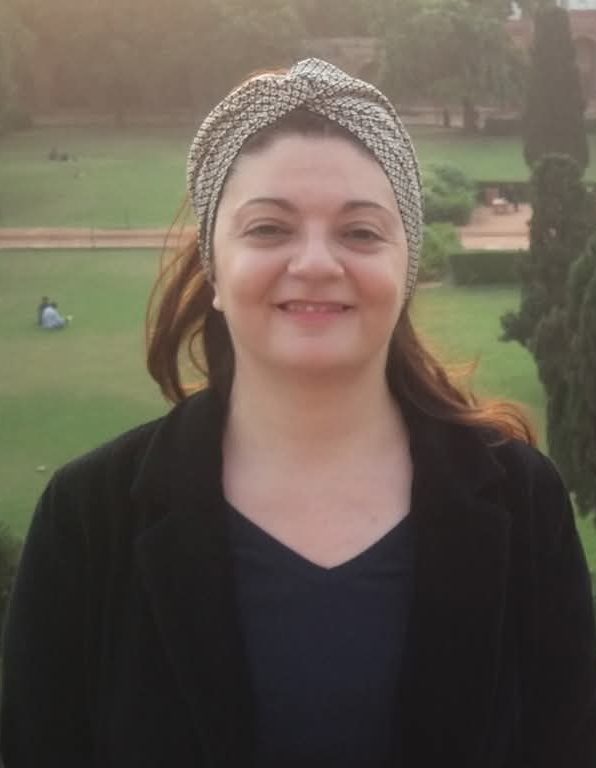
Dr. Amalia Dragani
(EHESS/France)
Dr. Amalia Dragani is a social anthropologist with a PhD from the École des Hautes Études en Sciences Sociales (EHESS). Her research focuses on the Sahara-Sahel, based on extensive fieldwork among Tuareg communities in Niger, Mali, and Algeria, as well as among their diasporas in Africa and Europe. She studies poetic creativity, intangible cultural heritage, oneiric inspiration, and intellectual, artistic, and political elites, as well as gender and mixed marriages; more recently, she has worked on Muslim-to-Christian conversion and Saharan student mobilities.
She was a Marie Skłodowska-Curie Fellow at the Laboratory of Political Anthropology (CNRS–EHESS), with a secondment at the University of Johannesburg (2024–2026), following a Marie Skłodowska-Curie Global Fellowship (2020–2023) involving the University of Florida and KU Leuven. She has received research funding from Sorbonne Université, the Musée du Quai Branly, and the Africa Multiple Cluster of Excellence (Germany). In addition to her academic work, she makes short films. She is currently General Secretary of APAD (Association for the Anthropology of Social Change and Development).
Contact: amalia.dragani@ehess.fr
Interdisciplinary Research Field (IRF): IRF II « Inequality & Mobility »
Like other young Africans, Saharan students increasingly cross borders in search of educational opportunities in other countries, particularly in the Maghreb, in order to gain professional prospects, acquire global skills and language competencies, and increase the number of highly trained Saharan professionals.
Saharan nomadic populations have historically faced difficult access to education and high dropout rates at all levels of schooling, largely due to conflicts, poor infrastructure, and economic vulnerability compared with urban regions of the Sahara-Sahel.
The MECAM project focuses on intra-African student mobilities and, in particular, on the little-known histories of Saharan graduates in Tunisia. It aims to challenge the common narrative of the Sahara as isolated and disconnected from the rest of the world, following the “mobility turn” in anthropology. Although considerable research has recently been produced on Saharan mobilities, student mobilities have received comparatively little attention.
My project aims to fill this gap and address the following questions: What role do Saharan professionals trained at international universities play in their home societies, given the sometimes conflicting expectations of local communities, traditional elites, institutions, governments, companies, and foreign actors (e.g., NGOs and military forces)? How do Saharan graduate elites establish objectives and develop strategic actions aimed at meeting these expectations when they are part of diasporic communities in the Global North?