


MECAM Fellow (2026–2027)
Project: Reframing Research in the Arab World: Anthropological Perspectives on Research Training and Researchers’ Mobility
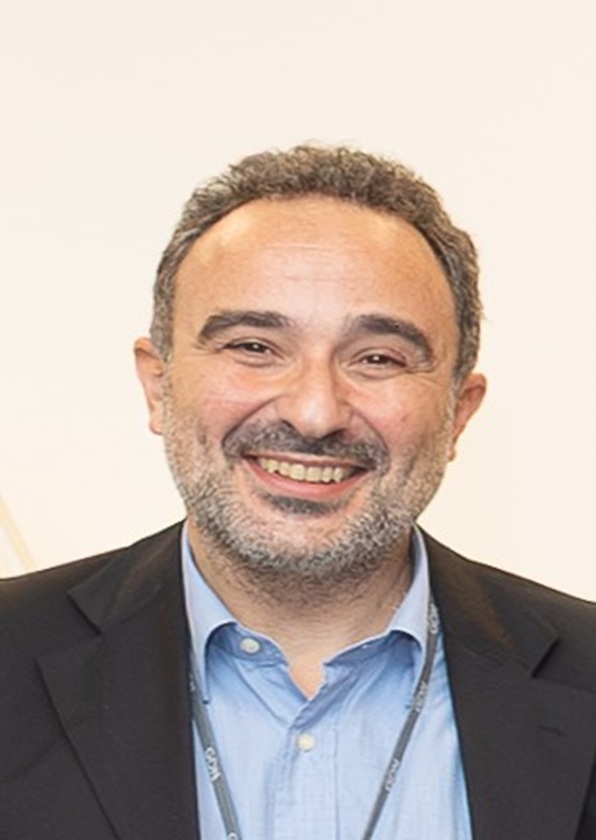
Dr. Daniele Cantini
(Global Development Network (New Delhi, India, and Clermont-Ferrand, France), affiliated with the Leibniz-Zentrum Moderner Orient, Berlin/Germany)
Dr. Daniele Cantini is a social anthropologist, currently a Fellow at the Global Development Network and an affiliated researcher at the Leibniz-Zentrum Moderner Orient in Berlin. He is the author of Youth and Education in the Middle East: Shaping Identity and Politics in Jordan (London, 2016), editor of Rethinking Private Higher Education: Ethnographic Perspectives (Leiden, 2016) and Bounded Knowledge: Doctoral Studies in Egypt (Cairo/New York, 2021), and co-editor of Social Anthropology in the Arab World: The Fragmented History of an Uncomfortable Discipline (New York/Oxford, 2025). A full list of his publications is available on ORCID.
Contact: daniele.cantini@gmail.com
Interdisciplinary Research Field (IRF): IRF II « Inequality & Mobility »
This ongoing project explores the relationship between scholars’ mobility, research infrastructures, career paths, and knowledge production in the social sciences and humanities across the region. During the fellowship, it will focus on the Maghreb in particular. The main research question is how recently established programs and institutions offering postgraduate training and research grants are altering the conditions of doing research, the selection of research themes and languages, and career paths in the social sciences throughout the region.
While mobility has always been a key component of academic labour markets, and research training obtained abroad has become a well-established norm, it has largely contributed to a process of systemic extraversion. In recent years, attempts have emerged to rearticulate local research landscapes through the establishment of new research training institutions and reforms of existing ones, with the aim of transforming the infrastructures of knowledge production. This development has the dual goal of countering the brain-drain effects associated with such mobility and enabling other research subjects, more attuned to local realities and often published in Arabic, to enter the research agenda.
The project asks how the movement of scholars influences the kinds of knowledge they produce, and to what extent newer forms of research infrastructure, including training and support, are altering the conditions under which knowledge is produced in, on, and for the region.