


MECAM Fellow (2026–2027)
Project: Narratological Adaptations, Ecocriticism, and Postcolonial Resistance in the Radio Folktales of Abd al-Aziz al-Aroui
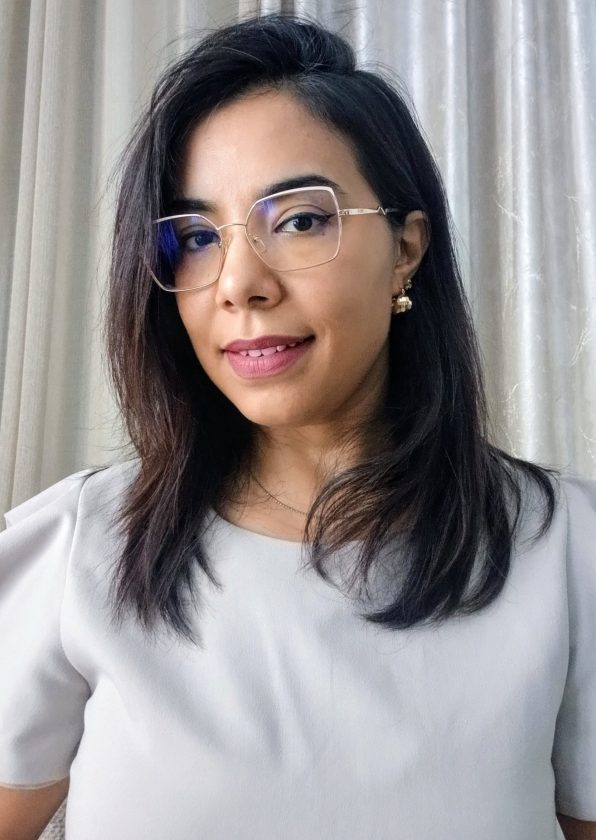
Dr. Sana BenAli Taga
(Higher Institute of Digital Engineering of Tunis/Tunisia)
Dr.Sana’ BenAli-Taga est maître-assistante en anglais à l’Institut supérieur d’ingénierie numérique de Tunis. Forte de quinze ans d’expérience académique et titulaire d’un doctorat en littérature anglaise, ses recherches explorent les articulations entre la théorie narrative et les pratiques culturelles. Ses publications portent également sur les approches écoféministes et les reformulations mythiques. Ses travaux récents explorent l’apport des humanités numériques à la préservation du patrimoine culturel, notamment des contes oraux. Elle met activement en dialogue les épistémologies locales avec des réseaux académiques transrégionaux tels que NeMLA, favorisant des approches communes des récits de résistance et de la mémoire restauratrice.
Contact : sana.benali.taga@gmail.com
Interdisciplinary Research Field (IRF): IRF IV « Resources &
Sustainability »
This project analyzes the radio-broadcast tales of Abd al-Aziz al-Aroui (1898–1971), the pioneering Tunisian storyteller, as a heteroglossic site of transition. Al-Aroui’s broadcasts remediate oral folktales for mass media, thereby preserving collective memory while addressing the systemic disparities of a modernizing nation. These hybrid tales rely on processes of borrowing while maintaining an authentic aesthetic imprint that distinguishes them from the “original” narratives.
My aim is to examine the structural transformation of these traditional narratives that al-Aroui adapted for national radio. Aligning with MECAM’s theme of “dealing with disparity,” this study specifically explores how the tales provide the postcolonial Tunisian public with epistemic tools to process socio-economic inequalities and ecological disruptions amid a shifting cultural identity. Narrated in the local dialect (Derja), these “Tunisified” versions of global myths function as a unifying space in a culturally and geopolitically transitional setting. Al-Aroui’s radio narratives can thus be understood as localized Tunisian broadcasts, regional phenomena, or democratized mass-media platforms, all intertwined with the emergence of postcolonial national consciousness. Al-Aroui’s narratives also merge high and low cultures, drawing on Bakhtinian dialogism to subvert colonial hegemony, as they center on the marginalized poor (Zawali).
Methodologically, I analyze al-Aroui’s official audio archives at the intersection of media studies, postcolonial studies, and ecocriticism. Ecocritical paradigms shed light on critiques of extractive resource exploitation through the figure of mythical monsters. Additionally, these stories provide a sustainable continuum necessary for preserving cultural heritage across generations and adapting to geopolitical change. The resulting research maps how mediatized oral tradition can be aesthetically and politically mobilized for national cohesion.